

Despite the fact that for many years memes and jokes about the difference between a boss and a leader have circulated on the Internet, the reality is that in the work we do every day it is as if we never get to understand it.
If we had to reduce or summarize the difference in very few words, we would say that a boss is a person who has the position, while a leader is a person who leads, regardless of whether they have the position or not. But what we are going to do in this article is go deeper into this distinction.
Leader or Boss
A leader inspires actions in others not only through their example, but also through clear direction and active motivation. A true leader goes beyond simply giving orders or setting expectations. A leader creates an environment where team members feel motivated and committed to follow a specific direction.
Scalability and Replicability
In recent decades, since the industrial revolution, when we talk about business development, the words that immediately come to mind are scalability and replicability. If we had to focus on two words what has been the priority of companies in recent decades, it would be that: simplify their processes to such a degree that they can scale much more easily.
This is why McDonald's is in Mexico and In-N-Out is not. McDonald's is in Mexico because it is a company that has been able to develop replicable and scalable systems.

Of course, this comes with a cost, often related to the quality of products or services. But it doesn't matter, because the point of going to eat a hamburger at McDonald's is not that it's the best hamburger in the world or the healthiest, but that it's reliable. When you go to McDonald's, you know exactly what you're going to get.
In contrast, companies like In-N-Out, which prioritize quality over expansion, face greater challenges in reaching other countries, due to the complexity of maintaining the freshness of their ingredients.
What does this have to do with leadership?
This same idea of ultra-simplification and ultra-standardization of processes also applies at the human resources level. In a post-industrial era, companies seek to have reliable processes so that if a person leaves their position or stops being productive, it does not represent the end of the company. Instead, you can simply disconnect that person from the system and connect another.
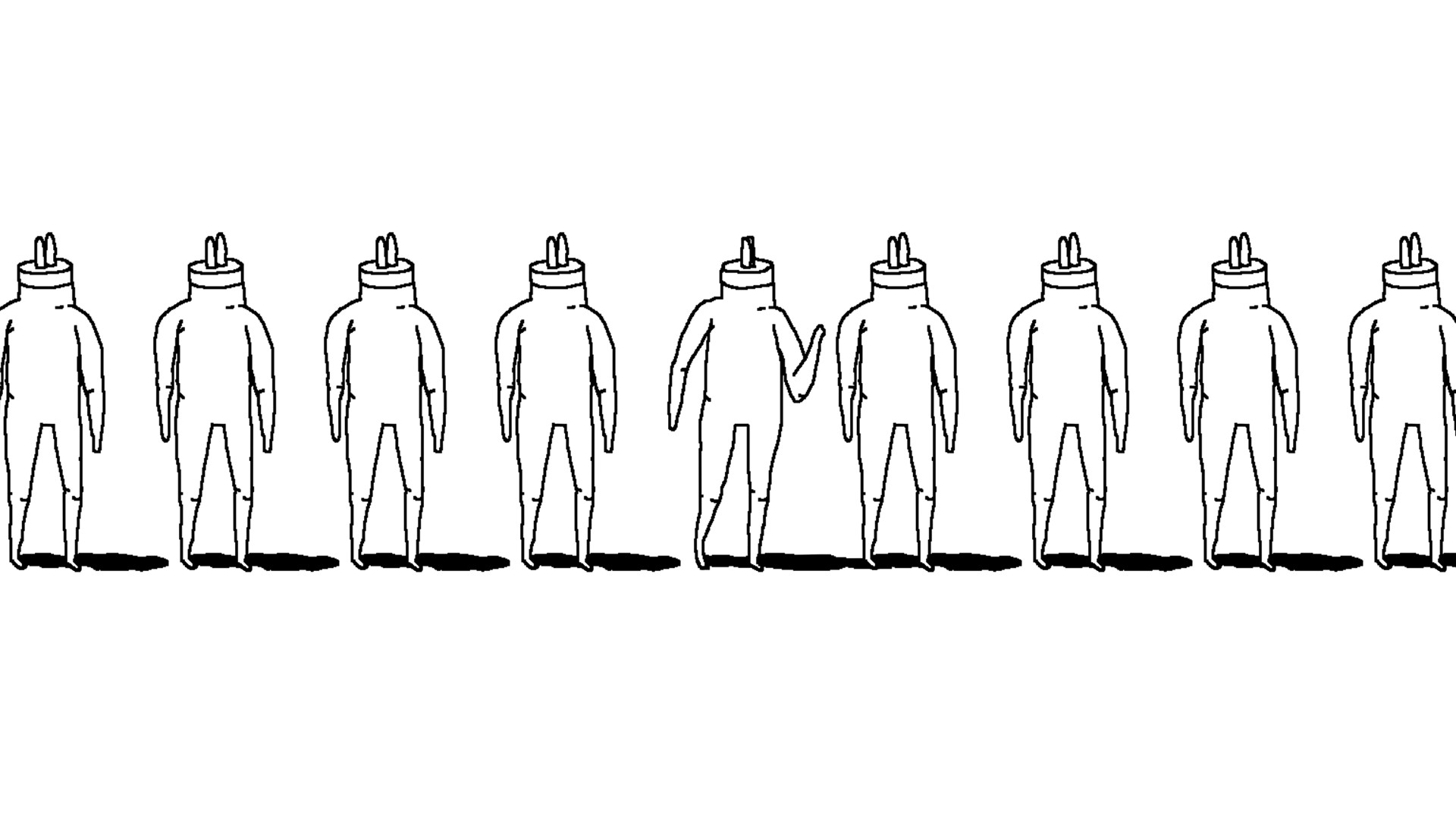
This is what we call process standardization, and it has been the way of working for the past few decades. Even business gurus have promoted this idea. The famous Michael Gerber e-Myth book talks precisely about the importance of having replicable and scalable processes to scale.
In principle, there is nothing wrong with having replicable and scalable processes. However, in recent years, we have realized the high cost this has at the human capital level. The cost in terms of emotional health, motivation, creativity and innovation is very high.
The Reinvention of the Workplace
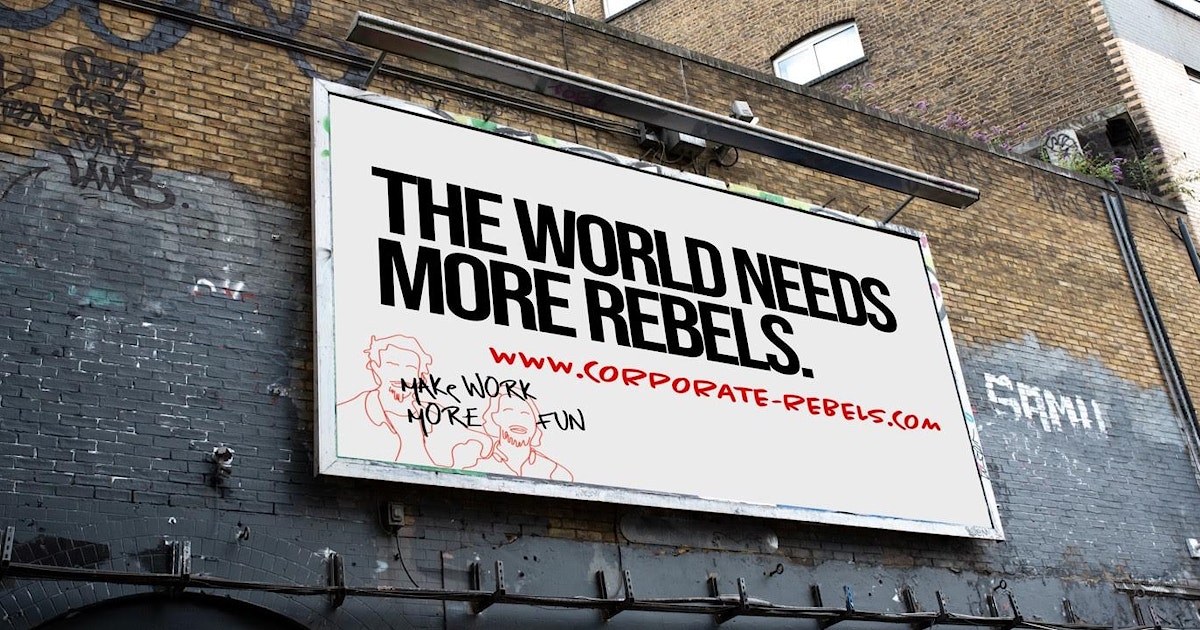
In response to this undeniable trend to reimagine and reinvent the workplace, Corporate Rebels presents its local cells project.
Corporate Rebels is an organization dedicated to identifying and promoting innovative and human work practices, inspiring companies around the world to transform their work environments.
The philosophy of Corporate Rebels is developed in eight key trends:
Progressive organizations are shifting their focus from simply increasing shareholder value to building a workplace centered on a shared purpose and values. This approach energizes and motivates employees, fostering a community of individuals with shared ideals. Emphasis is placed on clear and actionable missions rather than pretentious statements, aligning organizational, team, and individual objectives to ensure everyone works toward the same purpose.
From Hierarchical Pyramid to Network of Teams
Traditional hierarchical structures are being replaced by agile networks of teams. In progressive organizations, teams are typically small, multidisciplinary, and responsible for their own results. This structure increases adaptability, accountability, and entrepreneurial spirit, allowing teams to feel the direct impact of their successes and failures, promoting better collaboration and communication.
From Directive Leadership to Supportive Leadership
Directive leadership, characterized by control and fear, is giving way to supportive leadership. Leaders in progressive organizations support those "closest to the fire" by embodying the mission and values of the organization, removing barriers, and helping employees thrive. Authority is linked to the ability to lead by example rather than by rank, fostering a more engaged and motivated workforce.
From Plan & Predict to Experiment & Adapt
The traditional approach of planning and predicting is being replaced by an approach focused on experimentation and adaptation. As the environment becomes more complex, accurate predictions become less feasible. Progressive organizations embrace experimentation in products, processes, and structures, integrating change as a daily routine rather than an annual event. This approach values learning from failures and encourages continuous improvement.
From Rules & Control to Freedom & Trust
Bureaucratic control mechanisms are being replaced by trust and autonomy in progressive organizations. Believing that employees are responsible adults, these organizations reduce excessive control, allowing employees to decide how, when, and where to work. This increases innovation, creativity, and commitment by eliminating unnecessary barriers and fostering a sense of ownership and responsibility.
From Centralized Authority to Distributed Decision Making
Centralized decision-making is considered obsolete in progressive organizations. Instead, the authority to make decisions is distributed to frontline employees who have the best understanding of customers, suppliers, and production processes. This decentralized approach increases agility and responsiveness, empowering employees to make informed decisions quickly and effectively.
From Secrecy to Radical Transparency
Radical transparency is a distinctive feature of progressive organizations, where valuable information is accessible to all employees. This openness promotes trust, better decision-making, and faster problem-solving. Organizations that adopt radical transparency provide real-time access to data, documents, and finances, fostering a "ask anything" mentality and promoting collaboration both within and outside the organization.
From Job Descriptions to Talents & Mastery
Rigid job descriptions are being replaced by roles that leverage employee talents and strengths. Progressive organizations allow employees to choose tasks and responsibilities that align with their interests and abilities. This approach increases motivation and engagement, as employees are more likely to excel in roles that fit their natural abilities, creating a more dynamic and effective workforce.
That's why, very soon, we will launch the first Corporate Rebels cell in Mexico with an in-person event, designed specifically for human capital leaders in companies that are ready to reinvent themselves and explore new ways of working and leading.
If you are interested in participating, send us an email to contact@leaderlix.com and we will share the information with you.