
Do the Winners Write History?
The phrase "History is written by the victors" represents a notion we commonly hear in public interest settings or when discussing political matters. And although it's probably true that those who have victory also tend to revise history to tell it in their own terms, what we sometimes overlook is that frequently the one who wins does so because they have already started telling the story of victory, even before winning.
That's why a more empowering way to see it is by recognizing that "Those Who Write History Win".
Storytelling as a Strategy of Offense, Defense and Counter-attack
99% of the people who appear in media and tell stories miss the most important opportunity that storytelling offers, which is to review a specific event from a new perspective of victory. For good storytelling, there are no crises as risk, only as positioning opportunities. Think about Elon Musk when he presented the Cybertruck.
To make the point that the glass was very strong, he threw a heavy steel bullet. Everyone expected it not to break, but it did.
A "media spokesperson" would have done everything possible to downplay what happened. Instead, Musk asked to also throw it at the back window.
Not only that, but in the Cybertruck, on the vehicle's screen there is a "hidden gem" where you can play at breaking the glass where the glass broke on the day of the presentation.

This is a much better way to take the helm to avoid the storm.
Crisis = Opportunity
For a good storyteller, all crises are leverage for opportunity. Just as Aikido is to martial arts, storytelling is to conversations the alternative that allows you to use the force of your own opponent to strengthen your strategy.
This KFC campaign took advantage of a public relations crisis due to supply chain failures to open a new door for engagement and opportunity, both with existing and new markets.
Well Handled that Ball
Of course, it's key that you come to your interviews and media appearances prepared to argue and to convert your hosts' questions into opportunities to tell your story. Here are some of the strategies you can use to argue in your favor:
Bridging: A technique that consists of taking a difficult or unexpected question and redirecting it toward the main message you want to communicate. Example: "What is really important to remember here is…"
Reframing: Changing the perspective of a negative or challenging question to focus on positive or constructive aspects. Example: "Rather than a problem, I see it as an opportunity to…"
Strategic postponement: Responding to a difficult question by indicating that you don't have all the information at that moment, but committing to investigate and respond later. Example: "I don't have that information right now, but I will make sure to review it and share it with you."
Partial concession: Accepting part of a criticism or difficult question while still defending your own point of view. Example: "It's true that there were challenges, but we have also achieved…"
Counter-questioning: Responding to a difficult question with another question to buy time or to guide the conversation toward more favorable ground. Example: "That's an excellent question, but first I'd like to know…"
Use of figures or concrete facts: Using specific data to answer a difficult question, which gives credibility and reinforces the speaker's authority. Example: "In fact, statistics show that…"
Emotional appeal: Responding to difficult questions by connecting with the audience on an emotional level, using personal stories or anecdotes. Example: "I understand the concern, and I remember a case where…"
Positive Affirmation: Responding to a challenging question with a positive and proactive statement. Example: "We are focused on improving and have implemented several measures to…"
Divide the question: Breaking down a complex question into more manageable parts to answer each part effectively. Example: "That question has two parts; first… and then…"
Use of strategic silence: Taking a moment of silence before responding to a difficult question to think and give a more thoughtful and controlled response.
Acknowledgment of the question: Showing that you understand the concern behind the question before redirecting your response. Example: "I understand why you might think that, however…"
Reverse narrative: Taking a criticism or negative question and turning it around to show how it actually reinforces your argument or point of view. Example: "That might seem like a disadvantage, but it's actually a strength because…"
Euphemisms: Using softer words or phrases to handle sensitive topics without directly confronting them. Example: instead of saying "failure," use "unexpected learning."
Analogies and metaphors: Explaining or defending a point of view using comparisons with familiar situations or concepts. Example: "It's like when…"
Connecting with the audience: Adapt your responses so they resonate with the audience's values, interests, or concerns, creating a sense of identification and mutual understanding.
If after reading these strategies you realize that people with more "experience" in media use them, it's because they work, and just as they work for the most experienced masters of debate and argumentation, they can work for you.
You don't have to memorize them all. Practicing 2 or 3 for each media appearance can be enough to make your participation stellar.
Doubt is a Vote Against
Recently the influencer Jimmy Donaldson, better known as Mr Beast, experienced what will probably be remembered as the most significant scandal of his career, when one of his collaborators: Chris Tyson first announced his controversial decision to become transgender, legally changing his name and identity.
A few months later the crisis exploded when conversations were leaked in which Chris Tyson addressed minors inappropriately, collaterally damaging the image and integrity of Jimmy Donaldson.
Although Jimmy was not directly accused of committing any crime or behaving inappropriately with anyone, his mistake was delaying in expressing his point of view and distancing himself from Chris in a timely manner.
Jimmy Donaldson did speak out against Chris's actions, but by the time he did, it was too late. Filling the void, the story wrote itself. This is the importance of taking the lead and telling your story first, and the story of your brand, before others do it for you.
Moral Authority in Conversations of Controversy and Polarity
Participating on one side or the other in a polar conversation has equal risks and benefits.
Just as Target in the United States went through a "boycott" by the American conservative demographic when, to celebrate LGBTQ+ Pride Month in 2023, it opened an island of children's clothing with LGBT+ themes,
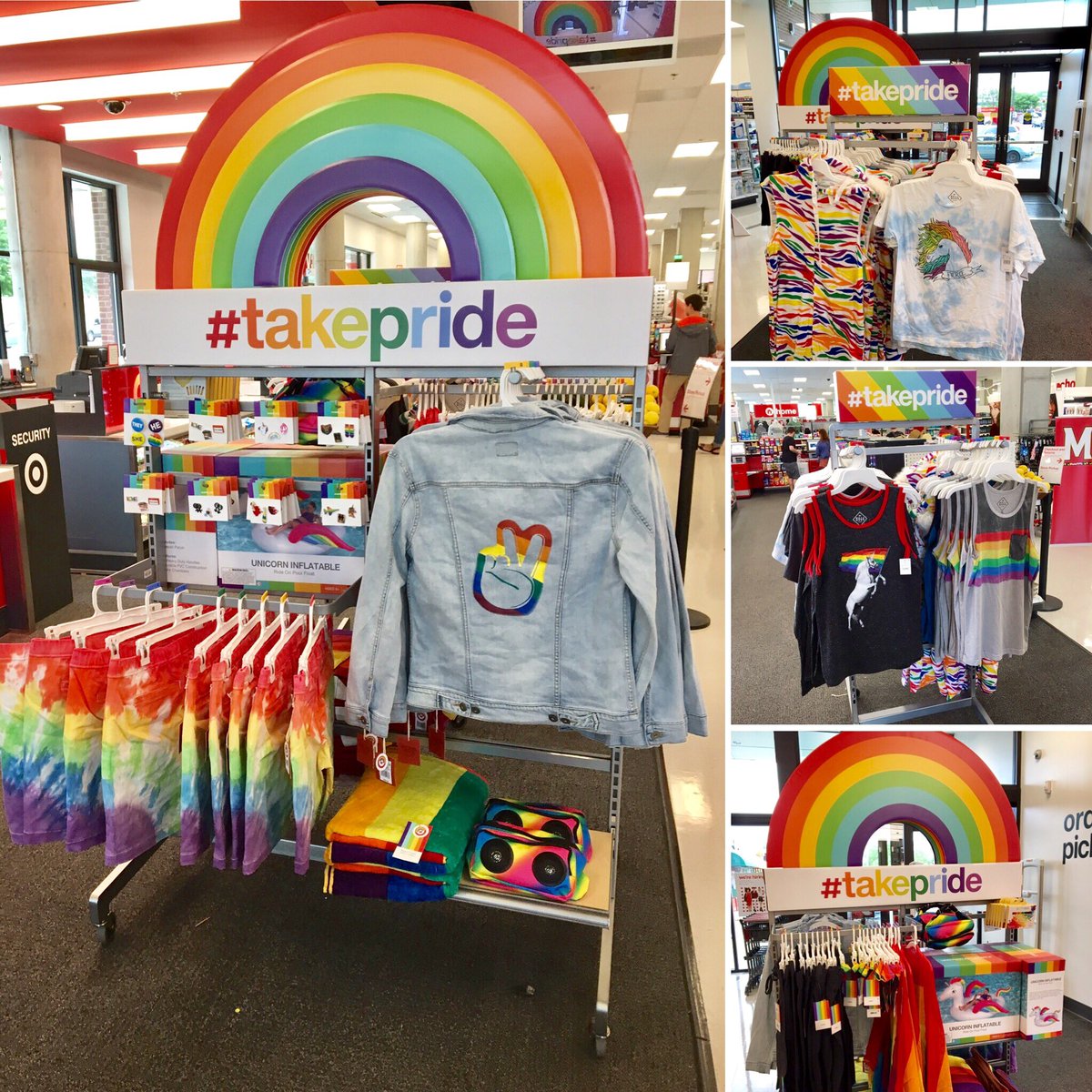
This decision was considered a risk factor for children, to the point that after just a few days they decided to remove the islands. But the damage was done.

Target's stock price fell to pandemic levels, losing all the gains from 2 years ago throughout the entire season and until last November when it finally started to recover.
The Silent Majority
From that moment on, many "brand lovers" became disillusioned. That's the risk of taking a side. That's why it's key that when doing so, you have a real understanding of public opinion on a given topic and not let yourself be carried away by what we personally or individually think is or isn't correct.
Opinion management for brands and companies goes beyond what one person in the offices may feel or believe about a particular topic.
It's key to make these decisions based on real information and specific data, not just on the pulse or feeling of what is apparently politically correct.
Often the silent majority begins
to raise your voice when a person, brand or company touches a sensitive nerve. We have to be extremely careful with this.
4 Steps to Tell Your Story in the Media
1: Do Your Homework.
Take the time to research the conversation you are about to participate in. Investigate the media outlet, the audience, the market, as well as journalists, editors and other actors involved in your participation.
2: Write Your Victory Story
Don't wait for others to decide who the hero of your story is. Write the story as the victor, even if you're still in the middle of the crisis.

In World War II, planes from the Allied armies dropped pamphlets from the sky over Japanese cities announcing the end of the war, even before the war truly ended. This contributed to both civil and military society gradually relaxing, and this was one of the factors that allowed the war to end more naturally and organically.
You can do the same. Write and tell the story as it happens, and share your victory with others. This is also a strategy used by politicians to balance votes in their favor. The example that comes to mind is Vicente Fox's famous "We already won."

Fox said in his campaign "We already won," before he won the elections, and he finally won.
3.- Do Role Play
There is no small interview. Your next media appearance could be the one that positions you personally and/or your brand as market leaders. It's worth dedicating time with your communication coach or trusted people to practice and explore the different avenues of how this could go well or badly.
How Do I Apply This to My Case?
Classic media training is dead. That's why at Leaderlix we do Story-Media Trainings. If you want more information we will be happy to evaluate your case and determine if we are in a position to work with you. You can request an exploratory call by selecting a date here. Or if you have an emergency you can write to contact@leaderlix.com and we'll get back to you in less than 24 hours.
{% module_block module "widget_4970de7b-a635-4542-9edc-be3dae94dea8" %}{% module_attribute "child_css" is_json="true" %}{% raw %}null{% endraw %}{% end_module_attribute %}{% module_attribute "css" is_json="true" %}{% raw %}null{% endraw %}{% end_module_attribute %}{% module_attribute "label" is_json="true" %}{% raw %}null{% endraw %}{% end_module_attribute %}{% module_attribute "meeting" is_json="true" %}{% raw %}"https://leaderlix.com/meetings/gerardo-betancourt/gerardo-betancourt"{% endraw %}{% end_module_attribute %}{% module_attribute "module_id" is_json="true" %}{% raw %}33947244299{% endraw %}{% end_module_attribute %}{% module_attribute "schema_version" is_json="true" %}{% raw %}2{% endraw %}{% end_module_attribute %}{% module_attribute "tag" is_json="true" %}{% raw %}"module"{% endraw %}{% end_module_attribute %}{% end_module_block %}