The endorsement of public figures and opinion leaders (KOLs) in politics can have a significant impact on the companies associated with them. A recent and controversial example is Elon Musk's, CEO of Tesla, endorsement of Donald Trump. This move has generated a series of reactions in the media, social networks, and among Tesla's consumers and shareholders.
Elon Musk is known both for his innovations in the technology industry and for his public statements that frequently generate debates. His support for Donald Trump is an extension of his participation in political discussions, which has led to questions about how this affects Tesla and his other companies.
This case seeks to analyze in depth the impact of this Musk decision, exploring from its background to the reactions and consequences on Tesla's image and market. Through detailed analysis, the aim is to provide a clear vision of the challenges and opportunities that these types of political endorsements can present for a company and its leadership.
Noah and His Ark
You can love him or hate him, but Elon Musk is known and known well. Arguably, he could be the entrepreneur we know the most about, and the truth is that many of us see him as a kind of Noah (proportionally speaking) of the modern era, largely because he has championed a BHAG (Big Hairy Audacious Goal), as bold as anyone: making the human race an interplanetary race. If that doesn't inspire you, nothing will. We can imagine him as a kind of missionary building an intergalactic ark that will take us to live adventures that were previously only possible in science fiction.
Before Tesla, we all talked about electric cars, but it was he who turned it into a reality. Tesla, Inc., founded in 2003 by Martin Eberhard and Marc Tarpenning, is an automotive and clean energy company that has revolutionized the industry with its innovations in electric vehicles and sustainable technologies.
The company gained worldwide prominence with the introduction of the Tesla Roadster in 2008, an electric sports car that demonstrated that electric vehicles could be both efficient and exciting to drive.
Over the years, Tesla has expanded its product line to include the S, 3, X, and Y models, as well as electric trucks and energy storage solutions such as Powerwall and Powerpack. Tesla's vision goes beyond automobiles; its mission is to accelerate the world's transition to sustainable energy.
Musk and his political opinions.
Elon Musk, born in South Africa in 1971, is an entrepreneur and technology visionary who joined Tesla in 2004, one year after its founding, investing significantly and assuming the role of chairman of the board. In 2008, Musk became Tesla's CEO and has been the driving force behind its growth and success.
Before Tesla, Musk cofounded Zip2, a software company, and PayPal, the popular online payment service. He is also known for founding SpaceX, an aerospace company with the mission of making life multiplanetary, and has started other companies such as Neuralink and The Boring Company, which focus on innovations in neurotechnology and urban transportation, respectively.
Elon Musk has not shied away from involving himself in political discussions. Over the years, he has expressed opinions on a variety of topics, from energy regulation to space exploration and artificial intelligence. Musk has interacted with political figures from different ideological spectrums, advocating for policies that support technological innovation and sustainability. His participation in Donald Trump's economic advisory council in 2017 was one of the first instances in which his relationship with politics became highly visible. Although he eventually left the council due to disagreements over climate policy, this and other actions have demonstrated his willingness to collaborate with political leaders to advance his business and technological objectives.
2004: Decision to join Tesla. Musk joins Tesla with the objective of revolutionizing the automotive industry and promoting the use of electric vehicles, underscoring his commitment to the environment and sustainability.
2017: Participation in Donald Trump's economic advisory council. Musk joins with the intention of influencing policies favorable to sustainable energy, but withdraws due to Trump's decision to withdraw the United States from the Paris Agreement.
2018: Statements on the need to regulate artificial intelligence. Musk warns about the dangers of uncontrolled artificial intelligence, generating debates in the technology and political communities.
2020: Criticism of COVID-19 restrictions. Musk calls stay-at-home orders "fascist" and reopens Tesla's California factory against local directives, which polarizes public opinion.
2021: Support for cryptocurrency policies. Musk expresses his support for Bitcoin and other cryptocurrencies, significantly influencing their market value.
2022: Twitter acquisition. Musk acquires Twitter, alleging concerns about freedom of expression, which is seen by many as a move with political motivations.
2023: Endorsement of Donald Trump. Musk declares his support for Trump, generating a wave of reactions in media and social networks.
2024: Statements following the assassination attempt on Trump. Musk condemns the assassination attempt and calls for national unity, stating that "violence is never the answer" and calling for "constructive dialogue to resolve our political differences." Additionally, Musk posted on the X platform: "I fully endorse President Trump and hope for his rapid recovery." The post included a 12-second video of Trump moments after the assassination attempt, surrounded by Secret Service agents, with blood on his face and raising his fist while saying "fight." The video was shared more than 400,000 times.
Additionally, reports indicate that Musk is positioning himself to become a major GOP donor, committing to donate $45 million per month to a pro-Trump political action committee.
A few days later, Musk announced his controversial decision to move the headquarters of X and Space X from California to Texas, following the passage of a law that gives the state decision-making authority over how minors who identify as transgender are treated.
Elon Musk's political positions and statements have had a significant impact on public perception of him and his companies. His comments on controversial topics such as artificial intelligence regulation, COVID-19 restrictions, and cryptocurrencies have polarized public opinion. While some see him as a visionary who challenges the status quo, others consider him reckless and polarizing.
Elon Musk has demonstrated consistency in his support for innovation and sustainability, although his methods and statements have varied over time. His willingness to participate in political debate and his tendency to make bold statements have been a constant. However, there have been changes in his political alliances and in the way he addresses certain issues, reflecting both his personal evolution and the changing dynamics of the political and social environment.
In summary, Elon Musk has not kept his opinions to himself. On the contrary, he has been vocal in expressing his political views. The question that comes to mind is whether his companies have seen meaningful changes in growth or sales?

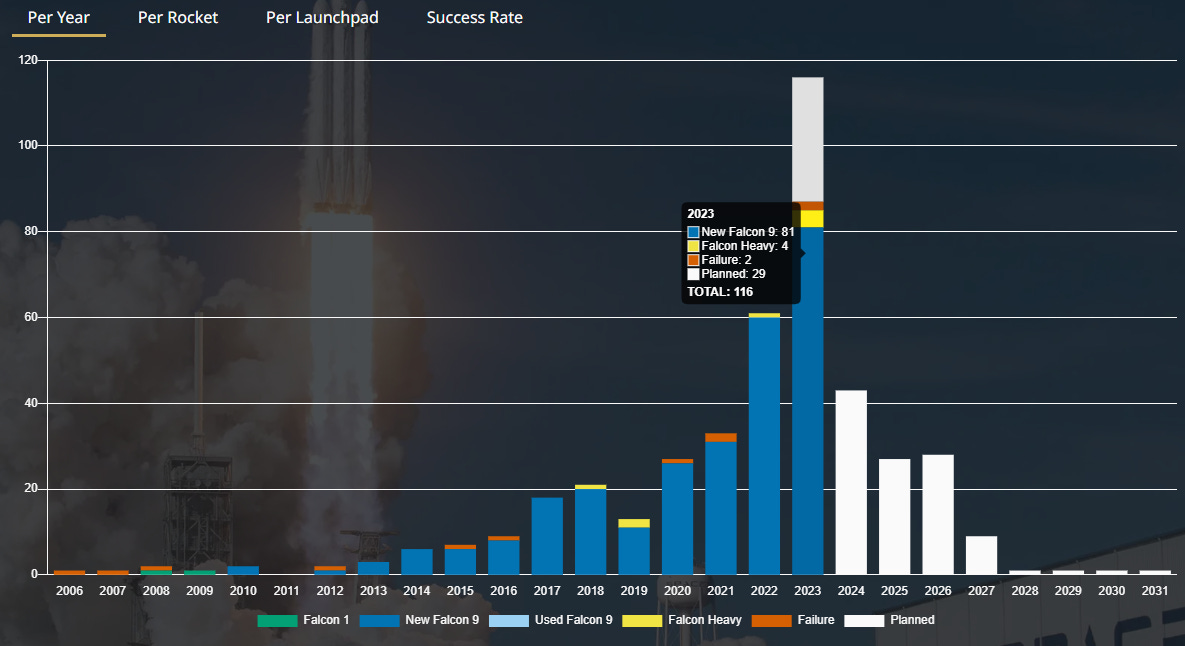
The short answer is: no. Elon Musk's companies have not stopped growing because of the opinions he shares on Twitter, the press, or any other platform.
But that doesn't mean that as companies we shouldn't be careful about what we say.
If you work with KOL teams and are looking for the best way to involve them in conversations of public interest, we recommend downloading our playbook: How to Create a Message Strategy to Address Matters of Public Interest through KOLs.